Morse Engineering and Construction Industries


Recent Posts

Archive

Options if Your Site Fails a Perc Test

Joseph Coupal - Friday, July 12, 2019
Percolation Testing

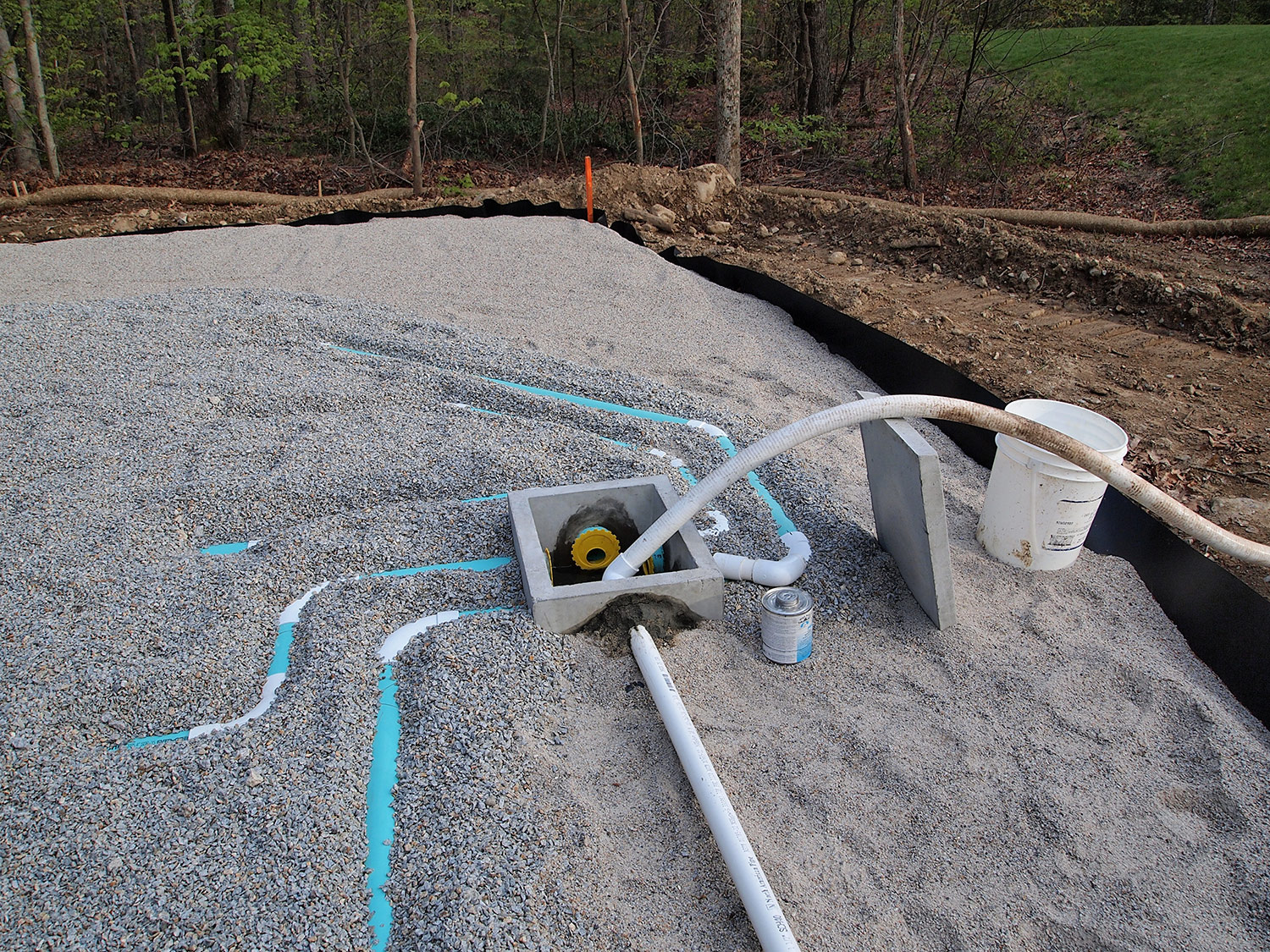
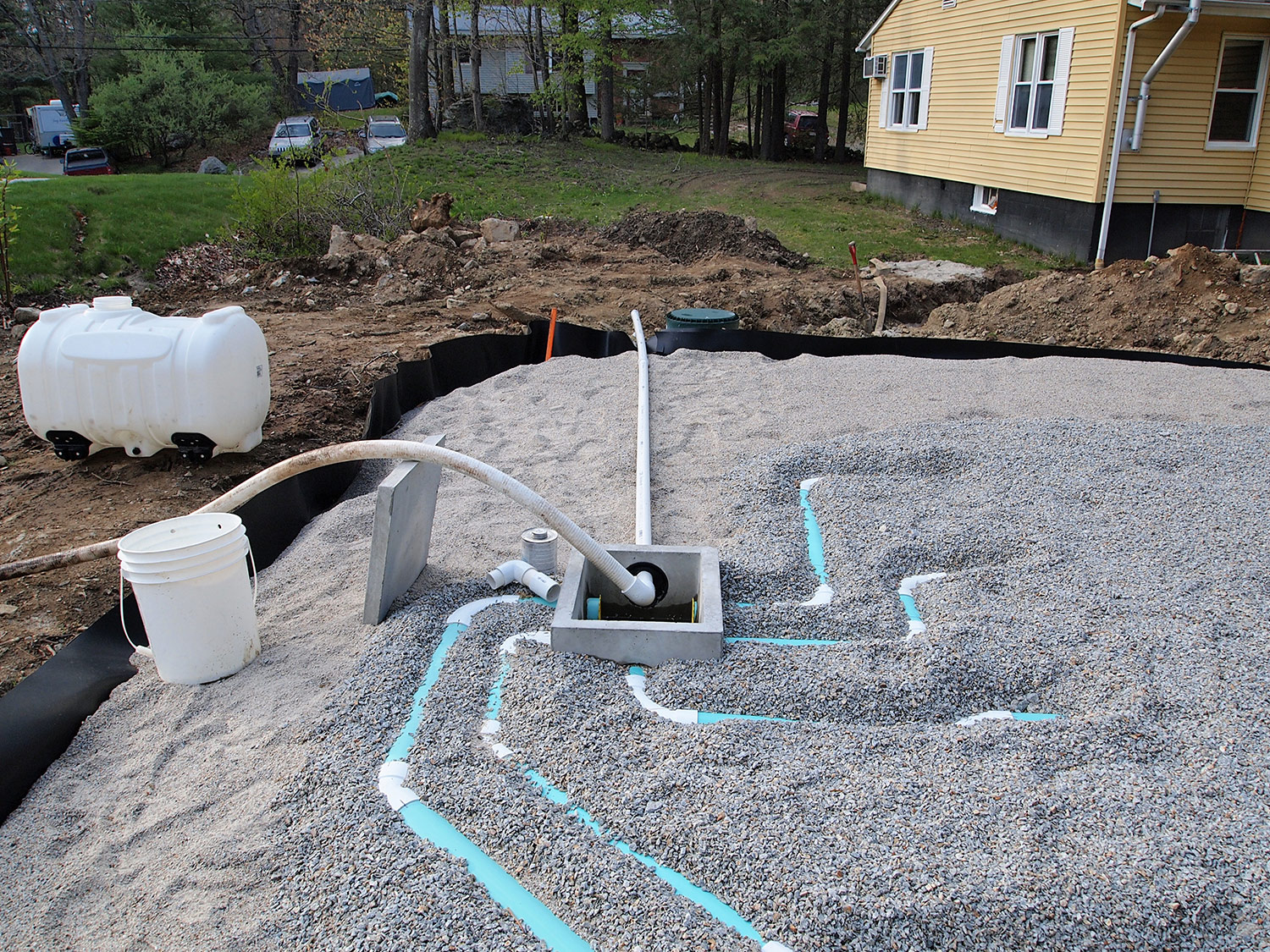
Even if your site fails a perc or deep-hole test, all is not lost. For sites with high water tables, you may be able to “de-water” the leaching area by strategically placing gravel-filled trenches and subsurface drain pipe to conduct water away from the drain field. You’ll need a highly experienced earthwork contractor, and possibly the help of a civil engineer or geotechnical engineer, to make this work.

Also, a wide range of alternative septic systems have been developed in recent years for use on almost any type of site. Find out which systems are approved for use in your area and which might be suitable for your site. In general, these systems cost more and many require pumps, alarms, and other components that require more monitoring and maintenance than a standard septic system. As these become more common and more widely accepted, formerly unbuildable lots may all of a sudden become approved building lots. As with all new building technology, however, look at products and systems with a proven track record in the field.

For more information, contact Morse Engineering and Construction.

Source: buildingadvisor.com


Failed Perc Test Means No House Can Be Built

Joseph Coupal - Thursday, June 27, 2019
Morse Engineering and Construction - Percolation Testing

On rural sites without municipal sewage systems, a failed perc test means that no house can be built – which is why you should make any offer to purchase land contingent on the site passing the soil and perc tests. As prime building sites become increasingly scarce (or prohibitively expensive) in many parts of the country, rural sites that will not pass a percolation or perc test are increasingly common.

In general, soils with high sand and gravel content drain the best and soils with a high clay content or solid rock are the worst. Most soils fall somewhere in the middle with a mix of course sand and gravel particles, small silt particles, and miniscule clay particles – the smallest.

To get a rough idea before investing time and money in testing, dig below the top few inches of topsoil (loam) to the lighter soil beneath and grab a handful. If the soil has a sticky, damp texture, and you can form a small lump of damp subsoil into a long, thin ribbon or worm shape that holds together, then the soil has significant clay content.

If you can form a ribbon of soil 2 in. or longer in the ribbon test, it indicates that the soil has high clay content and may fail a standard perc test.

The two main tests used to determine a site’s suitability for a septic system are a perc test and visual observation of the soil in a test pit, sometimes referred to as a deep hole test. Testing requirements vary greatly from state to state and often from town to town, as most states allow individual towns to establish separate rules within state guidelines.

Make sure you talk to your town health officer about what tests are needed, when they can be done, and who should perform them. Whether or not a licensed professional is required, it’s a good idea to hire a seasoned expert with local experience as many of these tests have a bit of wiggle room.

For more information, contact Morse Engineering and Construction.

Source: buildingadvisor.com


How To Inspect A Septic System

Joseph Coupal - Friday, June 21, 2019
Morse Engineering and Construction Industries, LLC - Septic System in Sturbridge, Fiskdale, MA

Q: I’m looking to buy a property that has an existing structure that hasn’t been used in 12-plus years. It has well and septic but the status and placement of the septic system is unknown.

Should I ask for a percentage test or deep-hole test prior to closing? Is there anything thing else I should consider as a contingency? The building was used as a business and residence previously.

A: A well-designed and maintained conventional septic system should provide 20 to 30 years of service before the drain field needs to be replaced. A lightly used system could last a lot longer.

There is no foolproof way to determine how many years of life you can expect from a functioning system, but a thorough inspection can determine whether the system is currently working properly. If not, you can identify what type of immediate repairs and improvements are needed to fix the system and bring it up to current standards. Since a complete new system can cost several thousand dollars, and an “alternative” system can cost over $20,000, hiring a professional to inspect the would be money well spent.

The first step is to find out as much as you can from the previous owner and the local health department. Ask:

  • When was the system installed?
  • Was the system properly designed, permitted, and inspected by the town or county?
  • How often was the septic tank pumped?
  • Does the health department have an “as-built” plan on file that would show the design and location of the components?

Also ask the local health department what type of inspection and/or upgrade might be required by the town upon transfer of title. Some jurisdictions require that all septic systems be brought up the current building codes when the property is sold. In some cases, this can mean building a new system from scratch. In that case, a perc test’ or “perk test and deep-hole test are in order to determine the soil conditions and seasonal high water table.

Assuming that the current system can be reused, your preliminary research will give you a better idea of the age and condition of the system, as well as its location on the site. A visual inspection of the site can sometimes identify obvious problems such as trees or traffic over the leach field or wet, smelly soil over a failed leach field. However, a system no used for 12 years would not provide such obvious clues.

A professional inspector can examine the septic tank for leakage of groundwater into the tank or leakage out of the tank, both of which can cause problems. If a 12-year-old tank is filled to the top, it may signal leakage from the exterior. If it is bone dry, it may indicate leakage out from the bottom.

Steel tanks, in particular, are vulnerable due to damage from rust. Lids can rust out creating a dangerous hazard. WARNING: Be especially careful when inspecting an old septic tank or cesspool as the cover can be rusted out or deteriorated and can collapse under your weight. Falling in can be fatal.

Other steel components, such as baffles, can be inspected for rust. The inspector may also recommend excavating and examining the distribution box. The septic tank, distribution box, and piping between components may have shifted over the years and pipes may have broken loose leading to leakage of untreated effluent into the soil. A thorough inspection can identify these problems.

Finally, a loading and dye test might be useful, but these tests are less reliable for an system that has been unused for a year or more. Since the soil around and under the leach pits has had time to dry out, it many readily absorb the dyed water during the test, but the system may fail once the leach field is active again. However, the test can provide critical information about blockages from roots or broken or disconnected pipes.

For more information, contact Morse Engineering and Construction.

Source: buildingadvisor.com


Perc Testing and Soil

Joseph Coupal - Friday, June 14, 2019
Percolation Testing

Traditional septic systems only work if the soil in the leach area is sufficiently permeable that it can readily absorb the liquid effluent flowing into it. Also, there must be at least a few feet of good soil from the bottom of the leach pipes to the rock or impervious hardpan below, or to the water table.

Less commonly, a site can fail because the soil is too permeable, allowing the effluent to reach the groundwater before it is fully treated. Very steep slopes are also unsuitable for a conventional leach field.

The specific standards vary from town to town, but any of these characteristics can prohibit the use of a standard gravity-fed septic system. In some cases, a more expensive alternative septic system may be allowed. To determine is a building site is suitable for a septic system, a percolation test (typically called a “perc test’ or “perk test”) is required. NO PERC, NO HOUSE h3

On rural sites without municipal sewage systems, a failed perc test means that no house can be built – which is why you should make any offer to purchase land contingent on the site passing the soil and perc tests. As prime building sites become increasingly scarce (or prohibitively expensive) in many parts of the country, rural sites that will not pass a percolation or perc test are increasingly common.

In general, soils with high sand and gravel content drain the best and soils with a high clay content or solid rock are the worst. Most soils fall somewhere in the middle with a mix of course sand and gravel particles, small silt particles, and miniscule clay particles – the smallest.

Squeezing the wet soil into a thin ribbon can provide a quick indication of clay content.

If you can form a long, thin ribbon of wet soil, it has a high clay content and my fail the perc test.

To get a rough idea before investing time and money in testing, dig below the top few inches of topsoil (loam) to the lighter soil beneath and grab a handful. If the soil has a sticky, damp texture, and you can form a small lump of damp subsoil into a long, thin ribbon or worm shape that holds together, then the soil has significant clay content.

The two main tests used to determine a site’s suitability for a septic system are a perc test and visual observation of the soil in a test pit, sometimes referred to as a deep hole test. Testing requirements vary greatly from state to state and often from town to town, as most states allow individual towns to establish separate rules within state guidelines.

So make sure you talk to your town health officer about what tests are needed, when they can be done, and who should perform them. Whether or not a licensed professional is required, it’s a good idea to hire a seasoned expert with local experience as many of these tests have a bit of wiggle room.

For more information, contact Morse Engineering and Construction.

buildingadvisor.com


Septic System Inspections

Joseph Coupal - Friday, June 07, 2019
Morse Engineering and Construction Industries - Septic System Construction Fiskdale, MA

A septic system receives, treats and disposes of unwanted wastewater and solids from a building’s plumbing system. Solids are partially broken down into sludge within a septic tank and are separated from effluent (water) and scum (fat, oil and grease). Effluent regularly exits the tank into a drainfield where it is naturally filtered by bacteria and reentered into the groundwater. Scum and sludge must be pumped periodically and should never enter the drainfield.

When should a septic system be inspected?

The septic system should be inspected once a year, including as soon as the house is put on the market for sale. This will enhance the home’s value and avoid any liability issues that might result from a malfunctioning system. It is in the interest of a prospective buyer to insist that the septic system be inspected before they purchase the home if it has not been done recently.

For more information on septic system inspections, contact Morse Engineering and Construction.

Source: nachi.org


Failed Title V Septic Replacement

Joseph Coupal - Friday, May 24, 2019
Morse Engineering and Construction Industries, LLC - Septic System in Sturbridge, Fiskdale, MA

If a property failed Title V, what does that mean to the buyer?

It means that the septic system will need to have some sort of repair, or full replacement. Who pays for the repair/replacement and how that payment is structured depends on buyer, seller, nature of the problem, and the lender. If a property was sold with no disclosure about a bad septic system, and without clear knowledge that any and all issues are the buyers responsibility, then legally, the responsibility will fall on the sellers to replace and pay for a clean Title V.

It has become customary for sellers to be responsible for Title V for a simple reason; most banks won't lend on a property with a failed system. So when we see "buyer responsibility" what it really means is "hard to borrow money against". As you can imagine, that significantly reduces the number of people who can purchase the property, so these properties often sell below market.

For information on replacing a failed Title V septic system, contact Morse Engineering and Construction.

trulia.com


Buying Land: Do You Need a Septic System?

Joseph Coupal - Friday, May 10, 2019
Morse Engineering and Construction, Fiskdale, MA

A sewer connection may be key to making your land purchase a good place on which to build a house

Found the perfect piece of land on which to build your dream home? Great! But unless you’re content to use an outhouse, you’ll want to find out whether a sewer system is available for the property, or whether you’ll need to install one.

The answer can affect not only your overall plans for the property, but your construction timeframe and budget.

Is the Property Served by a Sewer?

Question one is whether the property is already served by a sewer. (If not, you’ll need a septic system.) The easiest way to find out is to ask the seller of the land or a real estate agent, if one is involved. If there’s no one immediately available to ask, you can look for clues on your own.

If you know that municipal water is available on the property, chances are the property is also served by a sewer system. Sewer systems typically exist in areas of high population densities (due to the need to treat and dispose of large amounts of community wastewater). So, if the property is in a city, town, or a highly populated area, a public sewer system probably exists.

On the other hand, if the land must rely on a well for water, or if it’s outside of city limits, in a rural, or less populated area, you’ll probably need to install a septic system (which handles the waste water from your property only).

Also, if it’s a large, multi-acre property, (for example, land suitable for a ranch or a farm), it will probably require its own septic system.

Costs of Connecting to and Using an Existing Sewer System

If the property is served by a sewer system, things are pretty simple. Your main requirement as the land owner is to construct the connection from the new home to the main system. (In fact, you probably won’t be allowed to “go rogue” and construct your own septic, or alternative wastewater treatment system, even if you wanted to.)

If a sewer system is available, local regulations may require that you pay the sewer connection fees before a building permit is issued. Typical regulations also require that a professional contractor or plumber install the connection.

If the Property Isn’t Served by a Sewer: Regulations on Septic Systems

If you must install a septic system (because no sewer system serves the land), this will require more time and expense than simply connecting to a sewer. Because failing septics are a major source of water pollution (due to bacteria infiltrating nearby water supplies), almost all land is subject to state and local laws governing the installation and maintenance of septic systems.

Before installing a septic system, you will need to ensure that you comply with the applicable laws, first by obtaining a septic permit, probably from the county in which the land is located. A site evaluation is usually required before a septic permit can be issued. Most site evaluations must include a topography assessment, as well as a soils test (including a percolation or “perc” test). These can be completed by the local health department or a licensed site evaluator or engineering firm.

What the Site Evaluation Will Tell You

The results of the site evaluation will determine whether you can build a conventional (gravity-fed) septic system or whether an alternative system will be required. Alternative septic systems are essentially modifications of conventional septic systems, specifically engineered to work with the soils and topography found on a particular property.

If the results of the site evaluation show that your land is unsuitable for a conventional septic system, an engineer or septic design professional must design an alternative system. For example, if the property has a high water table, a sand or mound system might be recommended and designed, or if soil permeability is an issue, a pump system might be an alternative.

Unlike conventional septic systems (which typically cost $3,000-$5,000 to install), alternative systems can sometimes cost up to $40,000. This is on top of the cost of hiring the professional to perform or review a site evaluation and draft the septic design.

Make Sure You Have Enough Room Left for the Home

Septic regulations also govern where on the property the septic system can be installed. Septic systems must be set back a certain distance from wells and other water sources, as well as from roads, driveways, buildings, other improvements, and property lines.

These restrictions might severely impact where you can build your home. You must ensure that there will be enough room to install the septic system in a suitable location, in addition to a well (if necessary), and still have room to build the size of home you desire in an acceptable location.

For more information, contact Morse Engineering and Construction.

Source: nolo.com


Septic Tank Do's and Don'ts

Joseph Coupal - Friday, May 03, 2019


For more information, contact Morse Engineering and Construction.


How Septic Tanks Work

Joseph Coupal - Friday, April 26, 2019
Morse Engineering and Construction Industries, LLC - Septic System in Sturbridge, Fiskdale, MA

A septic tank is an underwater sedimentation tank used for wastewater treatment through the process of biological decomposition and drainage.

Septic tanks allow a safe disposal of wastewater and hence are widely popular in areas that have a poor drainage system or are off the mains sewage network. They work by collecting the excreta and wastewater in one big underground tank, they are predominantly used in rural areas.

Septic tanks are not used much in urban areas as waste in cities and towns is dealt with and transported through the sewage system, these are maintained by the water company in your local area.

Basics of home septic system:

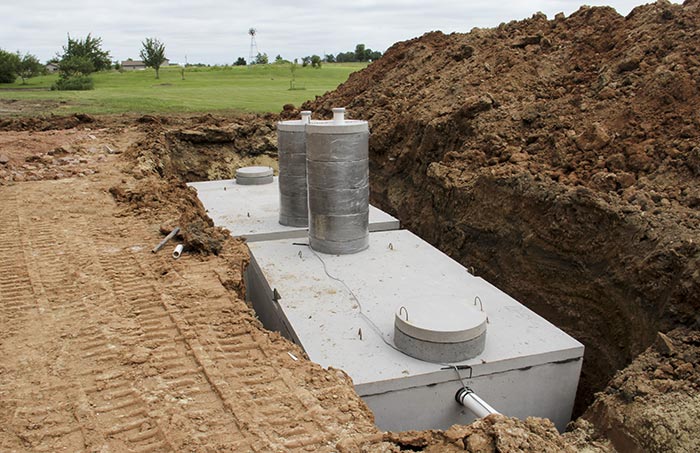
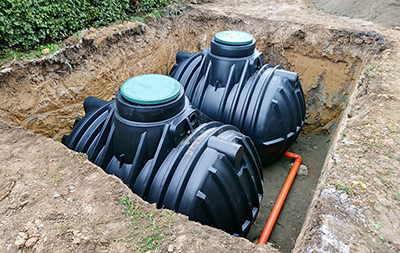
A septic system has a simple design. It is an underground watertight container (mostly rectangular or round) made of fiberglass, plastic or concrete.

The tank is connected with two pipes (for inlet and outlet). The inlet pipe collects the water waste in the septic tank, long enough that the solid and liquid waste is separated from each other. The outlet pipe also called the drain field, moves out the preprocessed wastewater from the septic tank and spreads it evenly in the soil and watercourses.

After a while, the wastewater separates in 3 layers.

The top layer is oils and grease and floats above all the waste. This is called scum.

The middle layer is the wastewater along with waste particles.

The bottom layer consists of heavier particles that are heavier than water and form a layer of sludge.

Inside the tank bacteria from the wastewater breaks down the solid waste.

These bacteria decompose the solid waste rapidly allowing the liquids to separate and drain away more easily.

Cleaning of the Septic tank : A requirement every few years

If a septic tank is not cleaned regularly (within 1 year for smaller tanks), toxins and antibacterial substances build up killing the vital bacteria that break down the waste.

Many household cleaners build up sludge and solid waste in the septic tank and drainfield lines. This leads to the septic system failure, by failure we mean that the solid waste blocks the system and overflows into the watercourse or out of the access grating.

Failure in the septic system is not only an expensive affair but also an invitation to waterborne diseases, it also smells fowl!

Depending on the severity and the damage to the entire septic system, it is important for people to understand how important septic tank cleaning is.

Follow a strict septic tank cleaning routine to protect the system against clogging and break down. You can contact waste treatment companies to take care of the septic system and ensure its proper functioning.

Cannot remember when you last cleaned the tank: Here’s what happens

The decomposition process in the tank slows down, leading to blockage and overflow. Over time, soil, sludge, excrement and solid waste build up, as a result, the solid waste starts to build up. This process gets worse and finally the septic system gives up and backs up completely.

It might be hard to tell when a septic system is in trouble. It can vary from as little as 2 years to as long as 100 years! Rather than waiting for the septic system to reach its breaking point, it is advisable to act upon it beforehand, cleaning the tank out every 1–3 years is advisable.

One of the best ways to do it is by cleaning the water before it leaves the tank. Applying a strong monthly septic tank cleaner upstream of the drainage zone as it abolishes the ill effects of soaps and cleaners that kill the bacteria in the tank. For decomposition of solid waste, it is very important that bacteria stays in the tank.

For more information, contact Morse Engineering and Construction.


What are Septic Tank Maintenance Costs?

Joseph Coupal - Friday, April 19, 2019
Morse Engineering and Construction Industries - Septic System Repair

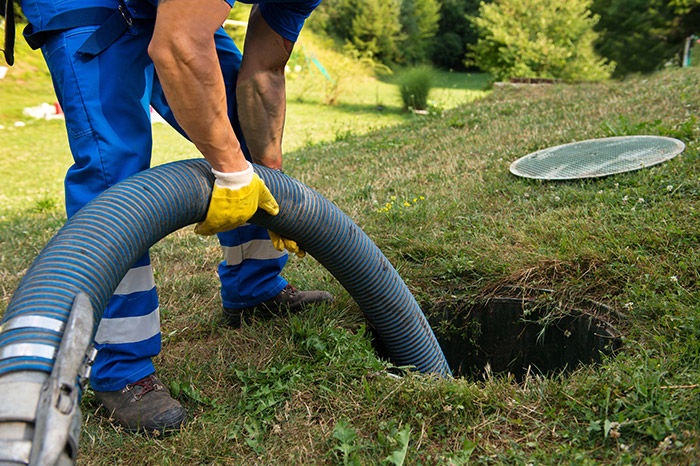
Even when your septic system is safely in the ground, your days of dealing with it are not done. For one, a septic tank will need to be maintained—which mainly boils down to having it pumped every few years. This keeps the sludge at the bottom from rising so high that it spills into your yard.

This is why the Environmental Protection Agency recommends having your septic system pumped once every one to three years.

The price range for pumping the tank is $300 to $400. At the very least, have your tank checked to see if it needs to be pumped. This is not the kind of thing you want to let slide, unless you want a sewage plant in your backyard.

And there are ways to save on maintenance: Just use less water by installing low-flow toilets and not running the water more than necessary. And in addition to researching the costs of installing and maintaining a home septic system, be sure to review and understand all your local laws and regulations involving wastewater treatment and related issues.

For more information, visit EPA.gov.septic or contact Morse Engineering and Construction.

Source: realtor.com