



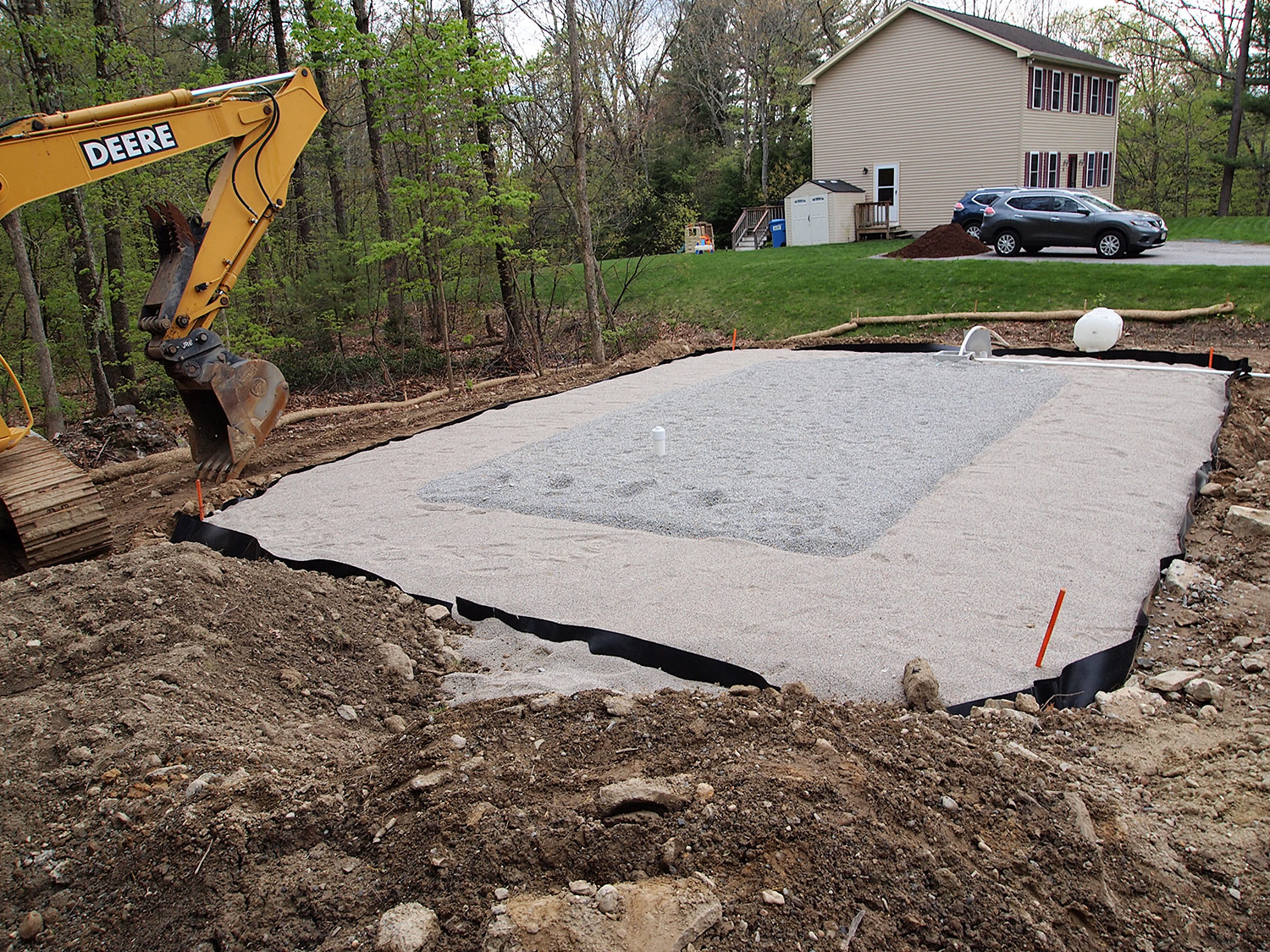
Once the evaluation, design, and permitting work are in place, the focus shifts to careful construction. On a lakefront property, how the work is done matters just as much as where the system is located.
Plan Access Before Equipment Arrives
Many lakefront homes have narrow driveways, tight side yards, retaining walls, stone steps, mature landscaping, or limited staging areas. A good construction plan considers how equipment will enter and exit, where excavated soil will go, how materials will be delivered, and how existing structures and landscaping will be protected.
In some cases, smaller equipment, temporary access mats, hand work, or phased excavation may be needed to reduce disturbance. These methods can add time, but they can also help prevent expensive damage to shoreline areas, lawns, trees, and hardscape features.
Make Erosion Control a Priority
Soil disturbance near a lake must be managed carefully. Without proper controls, rain can carry sediment, nutrients, and debris toward the shoreline. Common practices may include silt fence, straw wattles, stabilized construction entrances, temporary stockpile protection, and prompt restoration of disturbed areas.
Restoration should be part of the construction plan from the beginning. Final grading, loam, seed, mulch, native plantings, and drainage adjustments can help stabilize the site and reduce runoff toward the lake after the septic work is complete.
Protect the System After Installation
After installation or repair, everyday property use can affect long-term performance. Avoid driving or parking over septic components, keep deep-rooted trees away from the leach area, direct roof and driveway runoff away from the system, and make sure tanks and inspection ports remain accessible.
Lakefront homeowners should also be mindful of water use. Spreading laundry over multiple days, fixing leaks quickly, scheduling routine pumping, and avoiding grease, wipes, and harsh chemicals can reduce stress on the system and help protect water quality.
Questions to Ask Before Construction Starts
How will equipment access the work area without damaging the shoreline or landscaping?
- What erosion-control measures will be installed before excavation?
- Where will excavated material and new system materials be staged?
- How will the disturbed areas be restored after the work is complete?
- What maintenance schedule should the homeowner follow after installation?
The Bottom Line
Septic site work for lakefront homes requires careful construction, strong erosion control, thoughtful restoration, and long-term system protection. With the right planning and the right team, homeowners can protect both their property and the lake that makes it so valuable.
For more information, contact Morse Engineering and Construction.
